
Ghana to Host Global Reparatory Justice Conference in June

The June gathering in Accra will seek to translate a historic UN declaration on trans-Atlantic slavery into a concrete international framework — with African, Caribbean, and global leaders at the table.
Key points
- Ghana hosts a High-Level Conference on Reparatory Justice from 17–19 June 2026 in Accra
- Conference follows the adoption of UN Resolution A/RES/80/250, backed by 123 member states on 25 March 2026
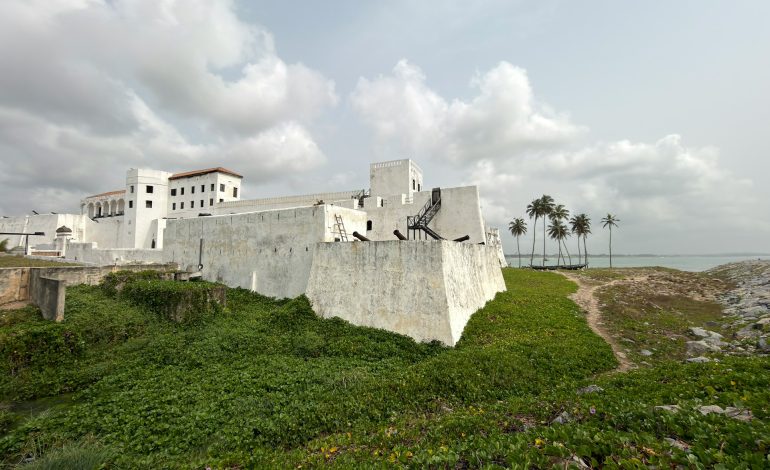
- A Juneteenth commemoration will be held at Christiansborg Castle, a site linked to the trans-Atlantic slave trade
Ghana will host a high-level international conference on reparatory justice from 17 to 19 June 2026 in Accra, in direct follow-up to a landmark United Nations General Assembly resolution that formally declared the trans-Atlantic enslavement of Africans as the gravest crime against humanity.
The conference will be held under the auspices of President John Dramani Mahama, who also serves as African Union Champion for Reparations–a role that placed him at the centre of the diplomatic effort that produced the resolution.
A Historic Resolution, Hard Won
Adopted on 25 March 2026 — the International Day of Remembrance of the Victims of Slavery and the Transatlantic Slave Trade — Resolution A/RES/80/250 was spearheaded by Ghana and co-sponsored by the African Union and CARICOM states. It passed with 123 votes in favour, 52 abstentions, and three votes against, from the United States, Israel, and Argentina.
While UN General Assembly resolutions are not legally binding, they carry significant moral and political weight. This one marks a turning point: where previous international language had stopped short of formal declaration, the resolution unequivocally names the trans-Atlantic slave trade as a crime — the gravest crime against humanity.
Speaking ahead of the vote, President Mahama invoked the scale of the injustice the resolution sought to address, referencing more than 12.5 million men, women, and children whose lives were stolen over the course of 400 years.
From Words to Framework
The Accra conference — formally titled the « High-Level Next Steps Conference on Reparatory Justice » — is designed to translate that political momentum into action. It will bring together heads of state and government, foreign ministers, academics, legal experts, historians, activists, and representatives of international organisations from Africa, the Caribbean, and beyond.
Discussions will centre on developing coordinated policy approaches, institutional frameworks, and mechanisms for sustained international engagement on reparatory justice. The expected outcome document will reflect, in the organisers’ words, « a collective effort aimed at developing coordinated policy approaches, institutional frameworks and mechanisms for sustained international engagement. »
A Symbolic Moment at Christiansborg
On the final day of the conference — Friday 19 June, Juneteenth — a special commemoration will be held at Christiansborg Castle in Osu, a historic site on the Ghanaian coast directly linked to the trans-Atlantic slave trade. The event is expected to draw participation from African and diaspora communities, particularly from the United States, bringing together shared history and collective memory in a setting that embodies both the weight of the past and the intent to move forward.
The conference will also seek to strengthen Africa’s unified position on reparatory justice and deepen collaboration with the African diaspora and international partners, as the continent works to build a coherent global coalition around the reparations agenda.